


Simple Japanese Lunch Ideas That Actually Work


Easy, realistic bento-style lunches for busy everyday life
For many people, lunch is the hardest meal to get right.
When work gets busy or stress builds up, it’s easy to grab bread, snacks, or cafeteria food—even when you want something more nourishing.
At the same time, many Japanese bento ideas online feel unrealistic.They look beautiful, but they often take hours to prepare and don’t fit real, everyday life.
The lunch ideas I’m sharing here are different.
They’re simple, flexible, and designed for real life—meals you can actually repeat on busy weekdays, not just admire on a screen.
Why Lunch So Often Falls Apart
Most people don’t struggle with lunch because they lack knowledge.
They struggle because lunch sits right at the intersection of:
time pressure
energy dips
stress
limited access to a kitchen
When these factors aren’t considered, even the “healthiest” recipe stops working.
The ideas below didn’t come from a recipe book.They came from many conversations about what actually feels doable during the workday.
Bento Idea 1: Miso Risotto
A warm, balanced lunch you can prep once
This Miso Risotto idea grew out of a very common situation:
Wanting something warm and comforting—but ending up with bread because it’s fast.
How it works
Chop vegetables such as spinach, tomatoes, mushrooms, onion, or carrots.Chop them small so they cook quickly. Frozen vegetables are a great option too.
In a heat-safe container, add:
Miso paste
Frozen or steamed rice
Vegetables
Cheese
Pepper
Canned beans
A little dashi stock (or a bouillon cube)
This can all be prepared the night before.
At lunchtime:
Add unsweetened milk (soy milk works especially well)
Microwave at 600W for 2-3 minutes
Stir, then heat one more minute if you prefer it thicker
Top with green onion or nori.
This single container includes carbohydrates, protein, and vegetables—but more importantly, it offers warmth and calm in the middle of a busy day.
It’s not fancy. It’s practical. And that’s exactly why it works.
Bento Idea 2: Edamame & Katsuobushi Onigiri

Light, portable, and surprisingly satisfying
Another frequent challenge is wanting something light—but still energizing enough to last the afternoon.
Edamame & Katsuobushi Onigiri are perfect for that balance.
How to make
Defrost edamame
Break cheese into small pieces
In a bowl, mix:
Steamed Japanese short-grain rice
Edamame
Bonito flakes (katsuobushi)
Cheese
Soy sauce
Place the mixture on plastic wrap and gently shape it.
Important:Always use Japanese short-grain rice. Other types won’t hold together well.
Onigiri are best made in the morning, but they can be prepared the night before.If reheating, sprinkle a few drops of water before microwaving to keep them soft and fluffy.
I often add tamagoyaki or cherry tomatoes on the side.A little color can make lunch feel much more enjoyable.
Bento Idea 3: Poached Chicken Sandwich
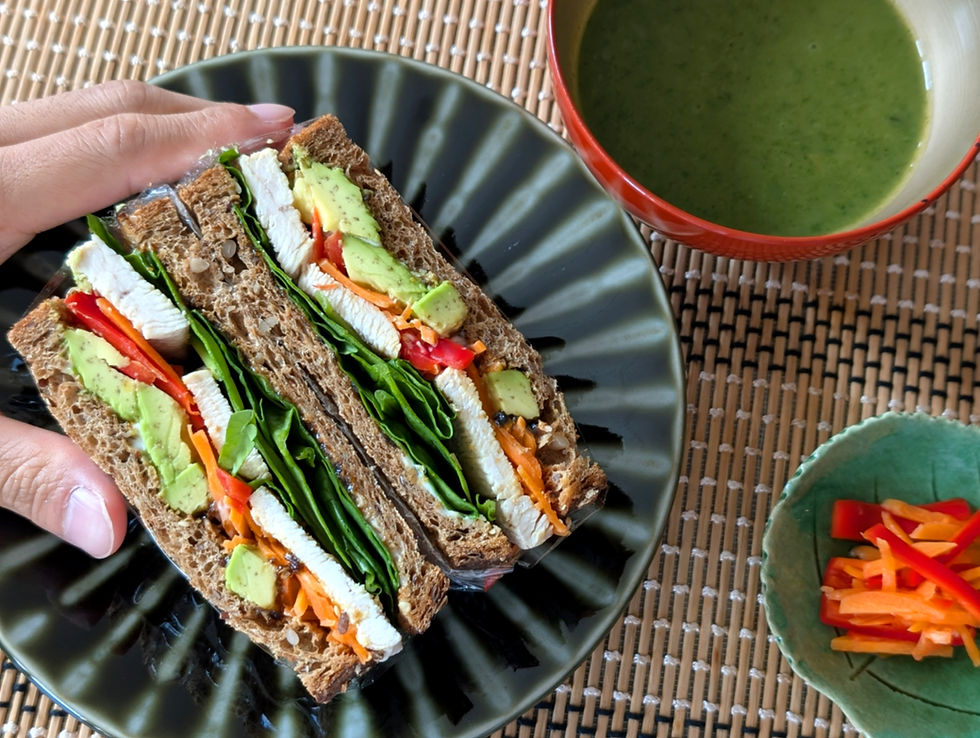
One preparation, many uses
Protein is another area where lunch often becomes complicated.
Poached chicken is a simple solution.
How to prepare
Bring water to a boil
Add salt and a small amount of sugar
Add a chicken breast
Once it boils again, turn off the heat
Cover with a lid and leave until room temperature (about 3 hours)
That's it.
The next day, pack bread and vegetables. At lunch, layer the chicken with your favorite condiments—mayo, mustard, or ketchup.
Poached chicken has a mild flavor by design. It absorbs sauces easily and stays juicy, making it very versatile.
Freezer & Storage Tips That Make Lunch Easier
Small habits make a big difference during the week:
Cook extra rice and freeze it in small portions
Slice poached chicken and freeze it with some cooking liquid
Label containers with dates
These steps save time, reduce food waste,and make your kitchen feel calmer and more manageable.
Bento Boxes and Natural Portion Balance
A bento box does more than carry food.
Its structure naturally supports:
portion awareness
variety
balance
You don’t need an Instagram-perfect lunch.
A small portion of rice, one protein, some vegetables, and a bit of texture—that’s already enough to feel nourished.
Here is our wooden bento box hand made in Japan.
Why These Recipes Leave Room to Adjust
These are not strict recipes with exact measurements.They’re gentle frameworks, meant to adapt to your taste, your schedule, and how your body feels on that day.
In Japanese home cooking, balance doesn’t come from precision. It comes from listening—to the season, to your body, and to how your day is unfolding.
Food works best when it fits real life—not when life is forced to fit a recipe.
A Gentle Next Step
If you’re reading this and thinking,“This makes sense—but I’m not sure how it fits my life,”that’s a very natural place to be.
Healthy eating doesn’t fail because people aren’t trying hard enough. It often fails because it’s too strict, too ideal, or too disconnected from daily life.
In my coaching, I don't aim for perfection. I look for something you can return to—even on tired days, busy days, or emotional days.
That’s why I work one-on-one in my coaching program. Not to give rules, but to help you gently design a way of eating that feels supportive, realistic, and sustainable for you.
If it feels right, let's talk!
MIWA
2026/02/02


My lower dishwasher rack had reached the point where I planned every load around the broken spots. Large bowls went in one corner, plates avoided the rusty tines, and pans had to be balanced carefully so the rack would roll in. One night I realized I was working harder than the appliance. I looked up the part number and found the Whirlpool lower dishrack assembly on Appliance Parts 4 All. In the center of my purchase, I chose W10728159 because it was the Whirlpool dishwasher lower dishrack assembly made for the bottom rack position. The product information matched my issue because it talked about wear, cracking, wobbling, and the rack not staying on its tracks. When the rack arrived, I…
Saint Petersburg State Pediatric Medical University is often discussed by students exploring medical education abroad because of its academic environment, clinical training opportunities, and long-standing presence in medical education.
For a long time, I thought that working remotely would be enough to manage my consulting projects while traveling between countries. However, once my workload increased, I started noticing that lack of a fixed workspace was affecting my efficiency. I needed something flexible but still professional enough for client interactions. During this search, I discovered the concept of a business center in dubai? while reviewing https://sorp.ae/en/business-center/. What stood out to me was how these centers are designed to eliminate operational stress by providing fully prepared office environments. Instead of worrying about logistics, I could focus entirely on business tasks. After spending some time working in such a setting, I realized how much structure it added to my routine. My meetings…
When I decided to add Islamic clothing to my retail assortment, I knew that finding a dependable wholesale supplier would be crucial. After researching several marketplaces, I chose Muslim clothing wholesale because of the extensive product range and the opportunity to work with Turkish manufacturers. From the beginning, the process felt organized and convenient. I could browse different categories, compare products, and select items that suited my target audience. The collection included stylish abayas, comfortable hijabs, elegant dresses, and many other modest fashion products that appealed to my customers. After receiving my first order, I was impressed by the overall quality, stitching, and presentation of the garments. Encouraged by the positive feedback from buyers, I continued sourcing products through https://turanline.com/muslim_clothing…
Deciding to travel to Honduras prompted me to give careful thought to the practical aspects of the trip, particularly safety during my stay. Since the destination was quite different from what I was used to, I realized the importance of having solid medical coverage right from the start. I looked for a plan that included international medical assistance, emergency services, hospitalization, and care throughout the entire trip. I found a very convenient service that could be purchased entirely online, which made the pre-departure planning much easier. The process was quick, clear, and free of unnecessary complications. I used https://auras.insure/travel-insurance-america/honduras/ and received a confirmation email within minutes. Since then, I travel with greater peace of mind and enjoy the destination without…